Ready to launch your career in the world of luxury aviation? Step into the role of a corporate flight attendant and master the unique blend of safety expertise, five-star service, and professional excellence demanded by the private aviation industry. This course will prepare you to confidently manage in-flight safety, deliver impeccable culinary and white glove service, and collaborate seamlessly with your crew. Gain practical skills, industry knowledge, and the poise required to exceed expectations in every flight—no matter the client or circumstance.
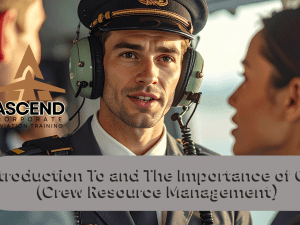
In the world of corporate aviation, safety and service excellence depend on more than just individual skill—they require seamless teamwork. Crew Resource Management (CRM) is the framework that empowers every crew member to communicate, coordinate, and support each other, ensuring the best possible outcomes for passengers and crew alike. By mastering CRM, you’ll be prepared to handle challenges, prevent errors, and deliver the highest standards of professionalism on every flight.
This lesson will guide you through the essential concepts and practical applications of Crew Resource Management (CRM) in aviation. You will explore the history, core components, and actual examples, while developing key communication and coordination skills.
Identify and explain the core components of CRM: communication, decision-making, assertion, and command.
Analyze actual case studies highlighting CRM in action or lack of CRM and the consequences
Practice and assess active listening and non-verbal communication skills.
Regulatory knowledge is the backbone of safe and professional aviation. As a corporate flight attendant, understanding the Federal Aviation Regulations (FARs)—especially the differences between Parts 91, 125, and 135—ensures you operate within the law, uphold safety standards, and maintain your credibility as a trusted crew member. These regulations shape everything from your daily duties to how you respond in emergencies, making them essential to your role in the cabin.
This lesson will help you understand key aspects of Federal Aviation Regulations (FARs) and how they impact flight attendants and various types of flight operations.
Seamless inflight procedures and effective cabin management are at the heart of every safe, comfortable, and memorable corporate aviation experience. As a corporate flight attendant, your meticulous preparation, attention to detail, and unwavering professionalism set the tone for every flight. From preflight planning to post-flight wrap-up, your actions ensure both safety and service excellence for every client and crew member onboard.
This lesson will guide you through the essential responsibilities and procedures required for effective cabin crew operations before, during, and after a flight.
Conduct pre-departure briefings with the flight crew and passengers. Download/practice of Briefings
Complete cabin and emergency equipment checklists. Download and review standard cabin/emergency checklists
Ensure passenger comfort through systematic checks and service.
Deliver routine inflight service with professionalism and precision.
Manage post-flight duties, documentation, and feedback.
Catering and safe food handling are at the heart of the luxury experience in corporate aviation. The quality, safety, and presentation of inflight meals can define a passenger’s impression of the entire journey. As a corporate flight attendant, your attention to culinary detail, food safety, and seamless logistics directly impacts client satisfaction and the reputation of your operation. Mastering these skills ensures every flight is memorable for all the right reasons.
By completing this lesson, you will gain essential skills for managing catering and food service operations to the highest standards.
Source and coordinate high-quality catering orders
Apply best practices for food safety and handling.
Storing, reheating, and plating food to five-star standards on board
Maintain impeccable cleanliness and hygiene in the galley.
Manage special dietary requests professionally and discreetly.
In the world of corporate aviation, five-star culinary skills and white glove service are more than just expectations—they are the hallmarks of elite hospitality. Your ability to deliver exceptional dining and attentive, discreet service sets the tone for every flight, leaving a lasting impression on clients and distinguishing you as a true professional. Mastering these skills is essential for creating unforgettable experiences and upholding the highest standards of luxury in the skies.
This lesson will equip you with the essential skills and knowledge required to deliver exceptional service in luxury aviation. By mastering the following objectives, you will be prepared to meet and exceed five-star hospitality standards.
Set formal tables and execute professional napkin folds.
Deliver wine and beverage service with confidence and expertise.
Apply white glove service protocols for every client interaction.
Demonstrate advanced hospitality etiquette tailored to luxury aviation in the 3 day in class training.
In the world of corporate aviation, your ability to respond quickly, confidently and appropriately in an emergency can make all the difference. Knowing your emergency equipment inside and out—and delivering clear, authoritative safety briefings—are essential skills that protect lives and inspire trust. As a corporate flight attendant, your professionalism and preparedness in these areas are not just expectations—they are non-negotiable responsibilities that define your role and reassure every passenger who steps on board that you place their safety as a priority as well as their comfort.
You be guided through the key skills and knowledge required for effective emergency preparedness and response in aviation settings.
This lesson will be revisited in the 3 day final to earn your certificate of completion. You must demonstrate knowledge of the equipment, by identifying, location, use and handling as part of your completion.
Conduct thorough pre flight equipment check
Use and deliver effective passenger safety emergency briefings.
Decompressions
Uniform, grooming, and professional conduct are much more than surface-level expectations in corporate aviation—they are the foundation of trust, client satisfaction, and your reputation as a luxury service professional. Every detail of your appearance and behavior signals your commitment to safety, discretion, and excellence. As a corporate flight attendant, you are not only representing yourself, but also your company and the entire industry with every interaction and impression you make.
This lesson will equip you with the essential standards and practices expected of corporate flight attendants, ensuring you represent your company with professionalism and integrity in every situation.
Required uniform and grooming standards for corporate flight attendants.
Demonstrate professional demeanor (poise) and communication in diverse scenarios
Uphold confidentiality and discretion in all interactions.
Applying behavioral best practices in various settings, from the hangar to the cabin
Representing your company brand with integrity and consistency
Corporate flight attendants are often faced with complex, sensitive, and high-pressure situations that demand exceptional judgment, empathy, and professionalism. How you respond in these moments can directly impact passenger safety, client trust, and your own reputation and career success. Mastering these skills is essential for anyone seeking to excel in the world of luxury aviation.
Corporate flight attendants are often faced with complex, sensitive, and high-pressure situations that demand exceptional judgment, empathy, and professionalism. How you respond in these moments can directly impact passenger safety, client trust, and your own reputation and career success. Mastering these skills is essential for anyone seeking to excel in the world of luxury aviation.
Assisting passengers with disabilities using best practices and regulatory guidelines.
Working with owners, VIPs, and challenging personalities with professionalism
Respond effectively to inebriated or disruptive passengers
Recognizing, responding, and reporting of suspected illegal activity or human trafficking
Maintaining professional boundaries and following appropriate reporting protocols
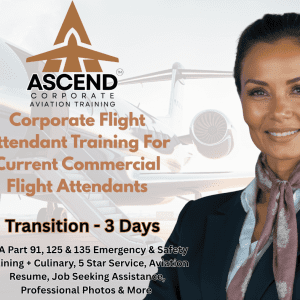 Corporate Training for Commercial Flight Attendants w FAA121 License
Price range: $1,600.00 through $2,100.00
Corporate Training for Commercial Flight Attendants w FAA121 License
Price range: $1,600.00 through $2,100.00
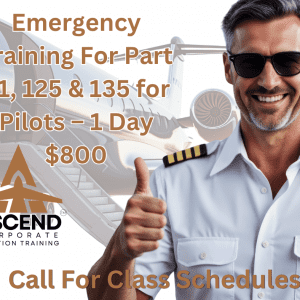 Pilot Emergency Training For FAA Part 91, 125 & 135 – 1 Day
Original price was: $950.00.$800.00Current price is: $800.00.
Pilot Emergency Training For FAA Part 91, 125 & 135 – 1 Day
Original price was: $950.00.$800.00Current price is: $800.00.
 Corporate Flight Attendant-Initial Training
Price range: $3,500.00 through $3,800.00
Corporate Flight Attendant-Initial Training
Price range: $3,500.00 through $3,800.00