Are you interested in becoming a corporate flight attendant? Look no further than our intensive 7-day course that will equip you with all the necessary skills and knowledge to excel in this dynamic field. Our comprehensive training covers a range of topics including handling emergency equipment, crew resource management, culinary skills, 5-star service standards, and aviation resume writing.
By enrolling in our program, you will gain valuable insights and practical experience that will set you apart from the competition. Our engaging expert instructors will guide you through each step of the process, ensuring that you are fully prepared to meet the demands of this exciting career.
Don’t miss this opportunity to kickstart your journey towards becoming a successful corporate flight attendant. Sign up for our course today and take the first step towards a rewarding and fulfilling career in aviation.


Step into the role of a corporate flight attendant and master the unique blend of safety expertise, five-star service, and professional excellence demanded by the private aviation industry. This course will prepare you to confidently manage in-flight safety, deliver impeccable culinary and white glove service, and collaborate seamlessly with your crew. Gain practical skills, industry knowledge, and the poise required to exceed expectations in every flight—no matter the client or circumstance.
Please download the Non Disclosure agreement and General Liability Release, sign and send back. It outlines and determines responsibility and limited liabilities of each participant during and after training: "You" are the attendee and Ascend Corporate Aviation Training as the "provider".
You will not be allowed to attend the final 3 days unless these forms have been sent in and your agreement is on file at the office.

In the world of corporate aviation, safety and service excellence depend on more than just individual skill—they require seamless teamwork. Crew Resource Management (CRM) is the framework that empowers every crew member to communicate, coordinate, and support each other, ensuring the best possible outcomes for passengers and crew alike. By mastering CRM, you’ll be prepared to handle challenges, prevent errors, and deliver the highest standards of professionalism on every flight.
This lesson will guide you through the essential concepts and practical applications of Crew Resource Management (CRM) in aviation. You will explore the history, core components, and actual examples, while developing key communication and coordination skills.
Identify and explain the core components of CRM: communication, decision-making, assertion, and command.
Analyze actual case studies highlighting CRM in action or lack of CRM and the consequences
Practice and assess active listening and non-verbal communication skills.
CRM began as Cockpit Resource Management, focusing on pilots and the flight deck. Over time, it became clear that safety and efficiency depended on the entire crew working together, not just the pilots. As a result, CRM expanded to include flight attendants, maintenance personnel, and other team members including ATC, reflecting the reality that every role is vital to a successful flight.
CRM is built on several key skills and behaviors that every crew member must master. These building blocks include decision-making, situational awareness, workload management, conflict resolution, assertion, communication, and command. Together, these components create a culture of safety, efficiency, and mutual support in the cabin and cockpit.
Assertive communication is vital in high-stakes situations. Use these structured steps to ensure your message is heard and understood in appropriate situations.

Command involves taking charge and providing direction, especially in emergencies. It’s about leadership, confidence, and ensuring that everyone knows their role.
Effective command helps the crew respond quickly and efficiently to any situation.
We are going to review a few case studies and scenarios that address how CRM or lack of affected the overall outcome.
WE will review a few actual airline incidents where most of the components of CRM were applied and maybe a few missed
In the aviation industry, clear and precise communication is more than a convenience—it's a necessity. Since communication is a core component of Crew Resource Management, we will introduce you to crucial terms and define them.
Every day, flight attendants, pilots, aviation support services and ground crew rely on a specialized language of terms, codes, and standards to ensure safety, efficiency, and professionalism. Mastering this language not only helps you avoid costly misunderstandings, but also builds your credibility and confidence as a valued member of the aviation team.
Whether you're coordinating with crew, briefing passengers, or communicating with ATC or with ground personnel, knowing the right terminology and codes sets you apart as a true professional. This lesson will help you speak the language of aviation fluently and accurately.
The following lessons will guide you through essential skills and knowledge areas required for effective communication and operations in aviation.
Learn key aviation terminology and acronyms essential for daily operations.
Interpret and use airport and city codes with confidence.
Apply the phonetic alphabet for clear verbal communication.
Convert and use military/24-hour time in aviation scenarios.
Reference and utilize glossaries to continuously build industry knowledge.
In this lesson, the definitions and explanations on essential aviation terminology, providing a comprehensive reference for aviation professionals and enthusiasts in the field.
The objective is to clarify technical concepts, operational procedures, and regulatory standards by presenting concise definitions and practical examples. The approach is structured as an alphabetical glossary, supplemented with corresponding definitions. The goal after completion is the outcome includes enhanced understanding of industry-specific language, improved communication among crew members and practical guidance for flight operations.

Understanding regional airport codes is essential for travel industry professionals to ensure accurate booking, routing, and customer service. This module highlights key distinctions and examples across U.S. regions.
Essential Reference for Airport Operations and Logistics
Broad Geographic Coverage and Market Insights
Facilitates a Standard for Industry Communication
Learning these codes is an indispensable resource for all aviation professionals who are managing travel logistics, optimizing routes, traveling, flying and delivering seamless service across the U.S. air travel network.
Learn and understand the importance of Zulu Time, Universal Time Conversion, and Military Time to Standard Time in aviation. Understanding these concepts is crucial for precise communication and coordination in the skies for not only pilots but for flight attendants as well.
Mastering these time formats ensures seamless operations and promotes safety. Elevate your aviation knowledge by grasping the significance of time conversion in this lesson.

In this lesson you will learn and apply the phonetic alphabet. Is widely used in aviation to ensure clear and accurate communication, especially in situations where audio clarity is critical or background noise is present. Each letter of the alphabet is assigned a distinct word (e.g., 'A' is 'Alpha', 'B' is 'Bravo'), and numbers are also given specific pronunciations (e.g., '3' is 'Tree', '4' is 'Fower', '9' is 'Niner').
Using the phonetic alphabet significantly reduces errors and improves understanding in high-stakes or noisy environments such as an airplane cockpit.
Regulatory knowledge is the backbone of safe and professional aviation. As a corporate flight attendant, understanding the Federal Aviation Regulations (FARs)—especially the differences between Parts 91, 125,121, and 135—ensures you operate within the law, uphold safety standards, and maintain your credibility as a trusted crew member. These regulations shape everything from your daily duties to how you respond in emergencies, making them essential to your role in the cabin.
This lesson will help you understand key aspects of Federal Aviation Regulations (FARs) and how they impact flight attendants and various types of flight operations.
Explain the purpose and structure of Federal Aviation Regulations (FARs) in regards to aircraft, operations, and crew.
Distinguish between Parts 61, 91, 125, 121, and 135 operations and their requirements and relevancy
Understand how duty and rest time regulations affect crew members
Identify flight attendant requirements for each operation type.
Apply best practices for compliance and documentation.
Familiarize yourself with these key FAA regulatory policies and terms before we review the importance of regulations on the aviation industry.
Click through these common scenarios to see how regulatory differences play out in real life and how it is relevant to being a flight attendant.
Duty and rest time regulations are designed to manage crew fatigue, protect passenger safety, and ensure compliance with federal law. Each FAR Part has its own set of rules regarding how long you can work and how much rest you must receive between duty periods. As a flight attendant, understanding these requirements is essential for your well-being and for maintaining safe operations on every flight.
Accurate documentation is a cornerstone of regulatory compliance for all flight attendants. You are responsible for maintaining checklists, recording crew qualifications, and tracking duty and rest periods. Proper record keeping not only demonstrates compliance during inspections but also protects you and your crew in the event of an incident or audit. Always ensure your records are up to date and reflect actual operations.
A solid understanding of FAA regulations—especially the differences between Parts 91, 125, and 135—is critical for safe, legal, and professional operations as a corporate flight attendant.
Seamless inflight procedures and effective cabin management are at the heart of every safe, comfortable, and memorable corporate aviation experience. As a corporate flight attendant, your meticulous preparation, attention to detail, and unwavering professionalism set the tone for every flight. From preflight planning to post-flight wrap-up, your actions ensure both safety and service excellence for every client and crew member onboard.
This lesson will guide you through the essential responsibilities and procedures required for effective cabin crew operations before, during, and after a flight.
Conduct pre-departure briefings with the flight crew and passengers. Download/practice of Briefings
Complete cabin and emergency equipment checklists. Download and review standard cabin/emergency checklists
Ensure passenger comfort through systematic checks and service.
Deliver routine inflight service with professionalism and precision.
Manage post-flight duties, documentation, and feedback.
Review and types of Briefings:
In this lesson we will be reviewing the components and purpose of each briefing as well as when to deliver.
Later in this course, we will be working on how to deliver effective briefings along with practice.
There are several checklists that are helpful to ensure that various required checks have occurred.
Systematic equipment checks are essential for ensuring the safety and comfort of everyone onboard. As a corporate flight attendant, you are responsible for verifying that all emergency and comfort equipment is present, functional, and properly stowed before every flight. These checks not only fulfill regulatory requirements but also prepare you to respond effectively to any situation that may arise in the air.
Addressing any issues before boarding to maintain safety and comfort standards throughout the flight.
Delivering a five-star experience means anticipating passenger needs and maintaining an immaculate cabin environment. Systematic checks of comfort items, cleanliness, and amenities ensure that every detail meets the highest standards. Your proactive approach and attention to presentation are what set corporate aviation apart from the rest.
Required after flight reports to document the trip
Inflight service professionals often encounter unexpected situations that require quick thinking and adaptability. Here are practical solutions to common challenges faced during flights, with tips for delivering exceptional service under pressure.
By creating and following a routine of inflight service in corporate aviation you are delivering personalized, discreet, and proactive care to each and everyone of your guests. From the moment passengers board to the final farewell, your ability to anticipate needs, adapt to preferences, and maintain a polished environment defines the client experience.
Consistency, flexibility, and attention to detail are your hallmarks at every stage of the journey.
Catering and safe food handling are at the heart of the luxury experience in corporate aviation. The quality, safety, and presentation of inflight meals can define a passenger’s impression of the entire journey. As a corporate flight attendant, your attention to culinary detail, food safety, and seamless logistics directly impacts client satisfaction and the reputation of your operation. Mastering these skills ensures every flight is memorable for all the right reasons.
By completing this lesson, you will gain essential skills for managing catering and food service operations to the highest standards.
Source and coordinate high-quality catering orders
Apply best practices for food safety and handling.
Storing, reheating, and plating food to five-star standards on board
Maintain impeccable cleanliness and hygiene in the galley.
Manage special dietary requests professionally and discreetly.
The process of sourcing and coordinating catering is both an art and a science. It begins with understanding your passengers’ preferences and requirements, then identifying reputable vendors who can deliver on quality and reliability. Clear communication is essential—every detail, from portion sizes to packaging and timing, must be specified. Advance planning, thorough documentation, and building strong relationships with vendors are key to ensuring every order meets both client expectations and regulatory standards.
Food safety is a non-negotiable priority in corporate aviation. Preventing food borne illness protects your passengers and your company’s reputation. This means maintaining strict temperature control, preventing cross-contamination, and following all regulatory requirements for safe food handling. As a flight attendant, you are the last line of defense—your vigilance ensures every meal served is both delicious and safe.
Proper storage, reheating, and plating are essential to delivering a luxury inflight dining experience. Store catering items promptly in the correct compartments, and always check that galley equipment is clean and functioning. Reheat foods according to recommended guidelines to preserve both safety and quality. Finally, plate each dish with care, using clean utensils and attention to detail to create a visually stunning presentation that delights your passengers.
Maintaining a spotless galley and cabin is essential for both passenger safety and the luxury experience. This includes regular cleaning schedules, proper waste management, and strict personal hygiene. A clean environment not only protects health but also reinforces your professionalism and attention to detail—qualities that clients expect in private aviation.
Personalizing the inflight dining experience means accurately documenting, communicating, and fulfilling special dietary requests. Whether for allergies, religious restrictions, or lifestyle choices, these requests must be handled with discretion and respect. Proactive communication with both passengers and vendors ensures every meal is safe, appropriate, and delivered with the highest level of service.
In the world of corporate aviation, five-star culinary skills and white glove service are more than just expectations—they are the hallmarks of elite hospitality. Your ability to deliver exceptional dining and attentive, discreet service sets the tone for every flight, leaving a lasting impression on clients and distinguishing you as a true professional. Mastering these skills is essential for creating unforgettable experiences and upholding the highest standards of luxury in the skies.
This lesson will equip you with the essential skills and knowledge required to deliver exceptional service in luxury aviation. By mastering the following objectives, you will be prepared to meet and exceed five-star hospitality standards.
Set formal tables and execute professional napkin folds.
Deliver wine and beverage service with confidence and expertise.
Apply white glove service protocols for every client interaction.
Demonstrate advanced hospitality etiquette tailored to luxury aviation in the 3 day in class training.
Professional wine and beverage service is a hallmark of luxury hospitality. From presenting the bottle to pouring with precision, every step should reflect both confidence and respect for the guest. Understanding proper etiquette, safety, and client preferences ensures that every drink is served to the highest standard.
This is an introduction into expanding your knowledge, skills and becoming the 110 % Corporate Flight Attendant Ascent with the goal of delivering consistent:
We will show examples of how to properly serve food as well as removed plates, serve ware etc.
Review of various Napkin Folds
Table Settings
Holiday Decor etc
We will review the proper way to open a bottle of wine, champagne as well pouring during flight
We will review the proper way to open, pour and serve beverages using the proper glassware.
A quick review of handy tools of the trade to carry with you at all times to help you make your job easy.
Emergencies demand more than just technical skill—they require flawless teamwork. In high-stress situations, clear roles, concise communication, and mutual support become even more critical. Crew members must rely on established protocols, trust each other’s expertise, and stay focused on the shared goal of protecting lives. Practicing emergency coordination ensures that, when the unexpected happens, the team can respond quickly and effectively.
Explore these essential protocols for effective emergency coordination. Following these guidelines ensures that crews can respond quickly, safely, and with clear communication during high-pressure situations.
Clearly assign roles and review emergency equipment locations.
Support the chain of command, but speak up assertively if needed.
In aviation, emergencies can unfold in seconds—and your ability to respond calmly and effectively can mean the difference between chaos and control. As a corporate flight attendant, you are the first line of defense when unexpected events threaten the safety and well-being of everyone on board. Preparation, knowledge, and composure are your most powerful tools. This lesson will empower you to recognize, manage, and lead during in-flight emergencies, ensuring you’re ready when every second counts.
This lesson will guide you through essential safety procedures related to decompression and hypoxia, ensuring you are prepared to respond effectively in emergency situations.
Time of Consciousness (TUC )
Hazardous materials (HazMat) are substances that can pose a significant risk to health, safety, or property. Corporate aircraft generally avoid carrying HazMat, but it’s essential to recognize these materials and understand the rules and exceptions that apply to private aviation.
Hazardous materials (hazmat) are categorized into nine internationally standardized classes based on their specific chemical and physical risks. Regulated by agencies like the U.S. Department of Transportation (DOT) and OSHA, these classes dictate strict storage, transport, and safety protocols.
In the event of a fire or hazardous materials incident, clear and immediate communication is essential. You must coordinate with the Captain and other crew members, follow established protocols, and provide accurate information to support a safe and effective response.
After an in-flight emergency such as decompression, hypoxia, or a medical incident, preparing the cabin and passengers for an emergency landing is crucial. Your leadership and attention to detail help ensure that everyone is as safe as possible during descent and landing. Follow established protocols and coordinate closely with the cockpit and ground personnel.
Knowing your emergency equipment is the foundation of safety in corporate aviation. As a flight attendant, your ability to quickly identify, locate, and confidently use every piece of emergency equipment can make the difference between chaos and control. Mastery of these tools ensures you are always ready to protect yourself, your crew, and your passengers—no matter what situation arises.
This lesson will guide you through essential knowledge and skills related to emergency equipment on corporate aircraft.
Locate and verify emergency equipment across various aircraft models.
Operate protective breathing equipment (PBE), life rafts, and oxygen systems.
Operate protective breathing equipment (PBE), life rafts, and oxygen systems.
Fires are among the most critical emergencies you may face in corporate aviation. At 40,000 feet, there is no fire department to call—your knowledge, vigilance, and immediate action are the first and best line of defense. Understanding how to prevent, identify, and respond to these threats is essential to protecting every life and asset onboard.
This lesson will guide you through essential safety procedures and protocols related to onboard fires, hazardous materials, emergency equipment, and incident communication.
Use of emergency fire-fighting equipment effectively.
Communicating, reporting and fighting incidents according to protocol
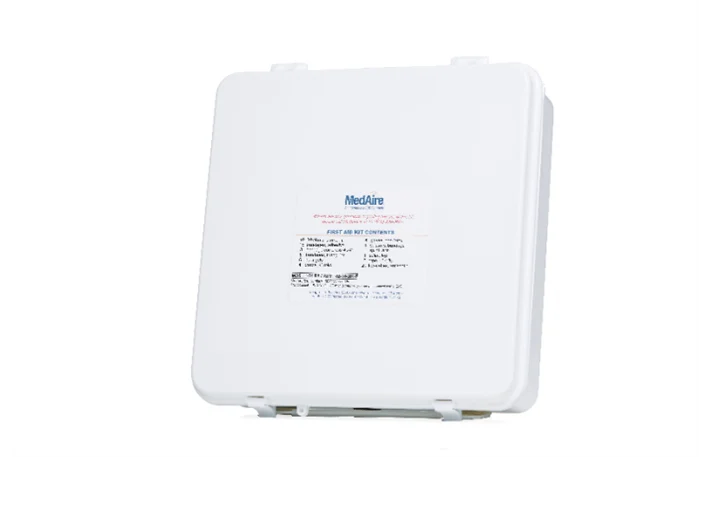
As a corporate flight attendant, you may be called upon to manage a variety of medical emergencies, from minor injuries to serious illnesses or even childbirth. Knowing the contents of your first aid kit (FAK)—and how to use them—ensures you can provide immediate care until professional medical help is available. Familiarize yourself with the kit’s location and inventory before every flight.
All corporate aircraft are equipped with specialized fire-fighting tools, including Halon and water extinguishers, smoke hoods, and crash axes. Some may now carry fire gloves and fire blankets.
Knowing where this equipment is located and how to use it—before an emergency occurs—is a required part of your pre flight preparation and ongoing vigilance.

Protective Breathing Equipment (PBE) and smoke hoods are designed to safeguard your eyes and respiratory tract during smoke or fire emergencies. These devices provide a continuous flow of oxygen, allowing you to fight fires or assist passengers in smoke-filled environments. PBEs are single-use, time-limited devices that must be donned quickly and correctly to be effective. Knowing how and when to use them is critical for both your safety and the safety of others.
Oxygen systems are critical for responding to decompression, smoke, or medical emergencies. Corporate aircraft are equipped with both fixed (overhead) and portable oxygen systems. Preflight checks are required to ensure these systems are fully functional and ready for immediate use, protecting both crew and passengers in low-oxygen or contaminated air situations.
For overwater flights or ditching scenarios, life vests, life rafts, and signaling devices are essential for survival. These tools provide flotation, shelter, and the means to attract rescuers, making them vital components of your emergency equipment knowledge. Understanding their operation and location is crucial for both crew and passenger safety.
This section outlines the essential life raft and signaling equipment found on aircraft, along with their proper use and important precautions for survival situations.
Life Rafts: The location of life rafts varies by aircraft. To use, remove the raft, attach the painter line, throw it into the water, and pull to inflate.
Signaling Devices: Equipment such as Emergency Locator Transmitters (ELT), mirrors, flares, flashlights, dye markers, whistles, and strobe lights are used to attract attention and aid in rescue efforts.
Hypothermia Precautions: To treat hypothermia, remove wet clothing, use dry layers, cover the head, and share body heat if necessary.
Every aircraft model has a unique layout for emergency equipment. It is your responsibility to know the exact location of each item before every flight. Reviewing aircraft diagrams and checklists ensures you can act quickly and efficiently in any emergency, regardless of the aircraft type.
Whether in the cabin or cockpit, jump seats are highly engineered safety equipment designed to fold up out of the egress path, withstand severe G-forces, and feature robust, multi-point restraint harnesses.
In this lesson we will review jump seats for both cockpit and cabin. Because it is safety equipment, the jump seat is part of the corporate flight attendants required pre flight to inspect and ensure that it is operational.
Before takeoff, it is crucial to conduct thorough checks of all aircraft doors and location of emergency exits to ensure passenger safety in the event of an emergency evacuation. Verify that each door is securely closed and locked, with the proper seals in place. Familiarize yourself with the location of emergency exits and evacuation procedures. Ensure that all emergency slides and escape ropes are properly stowed and ready for use. By performing these pre flight checks diligently, you can enhance the safety and efficiency of the evacuation process in case of an emergency.
In this lesson we will review the locations of primary emergency exits doors, over wing exits and certified secondary exits on these aircraft. Please note that certain aircraft models will have a baggage compartment that is either a certified secondary exit or there is an exterior loading door accessible from the ground. This is highly important to pre flight so that you are aware of this. A certified second emergency exit is one that needs to be used only in the case that primary or over wing exits are blocked or unusable.
In this lesson, we are going to review a case study /news story of a crash of a Challenger 600 and how the quick thinking of the flight attendant saved the lives of the two passengers. 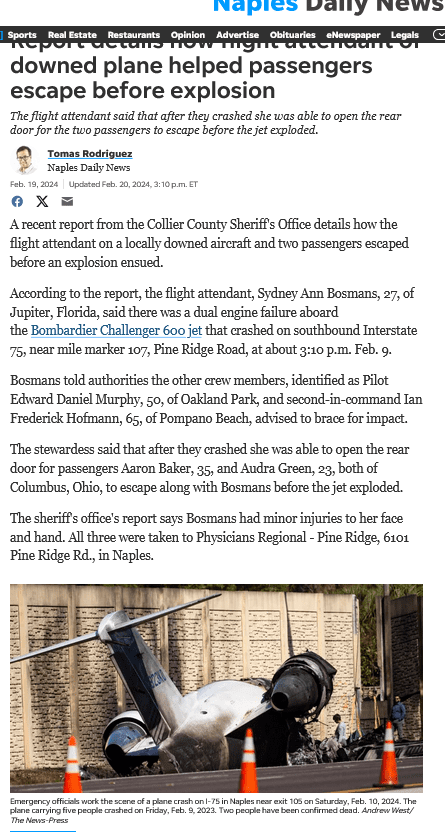
Maintaining professionalism and poise is another trait of a successful career as a corporate flight attendant. Every action, word, and decision you make directly impacts the safety, comfort, and trust of your clients, as well as the reputation of your organization. In the high-stakes world of corporate aviation, professionalism is not just a standard—it's an expectation that sets you apart.
This lesson will provide comprehensive guidelines on professional protocols and etiquette for business interactions, introductions, and addressing individuals within corporate and diplomatic aviation environments. It outlines standards for language, behavior, and conduct to ensure professionalism, respect, and proper hierarchy are maintained in all interactions with owners, passengers, and officials.
In this lesson we will review the following:
In business aviation, every interaction—no matter how brief—can leave a lasting impression on owners, executives, and distinguished passengers. The language you use, your demeanor, and your attention to detail all contribute to the perception of professionalism at 40,000 feet. Mastering polished interactions is not just about courtesy; it’s about upholding the highest standards expected in corporate aviation and ensuring every passenger feels respected and valued.
By the end of this lesson, you will be able to:
Demonstrate Service Protocols: Follow the correct order and standards for serving in-flight.
Understand the Rationale: Explain why polished interactions and discretion are essential in business aviation.
Apply Standards in Practice: Identify and correct unprofessional behaviors in real-world scenarios.
In business aviation, the way you introduce yourself and others—and the titles you use—can set the tone for every interaction. Proper introductions and precise forms of address are not just formalities; they are essential tools for demonstrating respect, establishing authority, and building trust with high-profile passengers and colleagues. Mastering these protocols ensures you represent both yourself and your organization with the highest level of professionalism.
By the end of this lesson, you will be able to:
Apply proper titles and forms of address in diverse situations
Recognize and respect organizational and cultural hierarchies
Navigate introductions with confidence and professionalism
In business aviation, professionalism is defined not only by exceptional service, but also by the ability to maintain appropriate boundaries with executives, owners, and passengers. Striking the right balance between attentive service and professional distance is essential for ensuring safety, protecting confidentiality, and upholding your reputation—and that of your organization. Mastering these boundaries sets you apart as a trusted aviation professional, capable of navigating high-stakes environments with discretion and confidence.
This lesson will help you master the art of maintaining professional distance and upholding exemplary business protocols in aviation. By the end, you will be able to:
Maintain appropriate boundaries with executives and passengers
Choose suitable conversation topics and avoid inappropriate ones
Corporate flight attendants are often faced with complex, sensitive, and high-pressure situations that demand exceptional judgment, empathy, and professionalism. How you respond in these moments can directly impact passenger safety, client trust, and your own reputation and career success. Mastering these skills is essential for anyone seeking to excel in the world of luxury aviation.
Corporate flight attendants are often faced with complex, sensitive, and high-pressure situations that demand exceptional judgment, empathy, and professionalism. How you respond in these moments can directly impact passenger safety, client trust, and your own reputation and career success. Mastering these skills is essential for anyone seeking to excel in the world of luxury aviation.
Assisting passengers with disabilities using best practices and regulatory guidelines.
Working with owners, VIPs, and challenging personalities with professionalism
Respond effectively to inebriated or disruptive passengers
Recognizing, responding, and reporting of suspected illegal activity or human trafficking
Maintaining professional boundaries and following appropriate reporting protocols
Real-world situations often require you to adapt and combine these best practices. By preparing for common scenarios—such as briefing a hearing-impaired passenger, guiding a legally blind traveler, or supporting an unaccompanied minor—you’ll build the confidence and flexibility needed to provide outstanding service in any situation.
We hope you like "role playing".
Exceptional service means customizing your approach to meet each passenger’s unique requirements. This may involve modifying safety briefings, ensuring comfort items are accessible, or adjusting emergency protocols. By proactively anticipating needs and maintaining open communication, you ensure both compliance and a truly personalized travel experience.
As you have learned in previous lessons, communication is the foundation of aviation safety with the implementation of CRM. It is equally important to provide effective communication with your guests to provide exceptional service. Every word, gesture, and interaction—whether with crew or passengers—shapes the safety, comfort, and overall experience of a flight. As a corporate flight attendant, your ability to communicate clearly and confidently not only prevents misunderstandings but also builds trust and reassures those in your care. Remember, effective communication is about more than just exchanging information—it's about creating clarity, confidence, and connection in every moment.
This lesson will guide you through essential communication skills for effective and inclusive interactions in various settings.
Practice Active Listening and Cultural Sensitivity
Adapting Your Communication Style for Diverse Needs
In previous lessons you have learned that providing a comprehensive safety briefing is both a regulatory requirement and a vital part of your role. But how you deliver a clear, well-structured briefing ensures passengers know what to do in an emergency and helps them feel secure. Each and every time you do a safety briefing, your goal is to communicate essential safety information in a way that is easy to understand, engaging, and tailored to your specific aircraft and passenger group.
It’s the small, thoughtful touches—like a beautifully folded tissue, a personalized amenity, or a handwritten note—that transform good service into unforgettable hospitality. These details signal your pride in your work and your genuine care for every guest.
In luxury aviation, every detail is a statement: your skill, your pride, and your commitment to excellence define the passenger’s journey.
Are you ready to streamline your packing routine and become deployment-ready for any assignment? This 1 hour course will provide proven strategies and insider tips from various sources to help corporate flight attendants minimize baggage, stay organized, and adapt quickly—whether you’re preparing for a last-minute international trip or a quick domestic turnaround. Learn how to coordinate your wardrobe, assemble essential travel kits, and master efficient packing techniques so you can focus on delivering exceptional service, no matter the destination or climate.
This approach includes practical strategies:
We will be providing links to suggested purchases as well as examples throughout this lesson.
Please note that we are not specifically endorsing or promoting any particular retailer. We are showing you specific examples and encourage you to do your research and make educated decisions based on your preferences and needs.
International Do's and Don't's
Passport/Travel Papers/Paperwork/ Documentation
Returning to the USA
US Customs / Allowances
Layovers
Personal Safety
Self Defense
Review of self defense techniques - will be demonstrated in class as well
In corporate aviation, your appearance is more than just a personal choice—it's a direct reflection of your professionalism and your company’s brand. The way you present yourself in uniform sets the tone for every client interaction, influencing trust, confidence, and the overall perception of service quality. First impressions are formed in seconds, and as a corporate flight attendant, your uniform and personal presentation are your first statement to clients, colleagues, and leadership alike.
Understanding and upholding uniform standards is not just about looking the part—it's about embodying the values of excellence, attention to detail, and respect for the high standards expected in this elite industry.
Grooming Standards
Appreciating the Impact of Your Appearance
Develop a Readiness Checklist
This lesson will guide you through the process of preparing your uniform to ensure you meet professional standards and are ready for duty.
Grooming is a vital part of your professional image as a corporate flight attendant. Beyond the uniform, your hair, makeup, hygiene, and overall appearance play a significant role in how clients perceive you and your company. Consistent grooming standards not only boost your confidence but also reinforce the high expectations of the industry.
Maintaining a polished appearance requires attention to several important details. Review the following elements to ensure you meet or exceed grooming expectations every day.
Makeup and Nail Care
Hygiene and Fragrance
Tattoos and Piercings
Continuing your education is essential for every corporate flight attendant who wants to excel in the luxury aviation industry. Therefore the initial training program you choose not only shapes your skills and knowledge, but also impacts your career opportunities, professional reputation, and ability to deliver exceptional service. Selecting the right training is a strategic investment in your future, opening doors to advancement and recognition in a competitive field.
This lesson will help you gain a comprehensive understanding of the landscape of corporate flight attendant training programs and how to choose the best path for your professional growth.
Identify leading corporate flight attendant training programs and their providers.
Compare curricula, training philosophies, and delivery methods
Assess industry recognition and reputation of major programs.
Evaluate options for continuing your education and certification with annual recurrent
Make informed decisions about your professional development path.
Review of Annual Recurrent, Why it is necessary
TBD
Learn about Embraer’s new Praetor 600E and Praetor 500E aircraft, the first evolution of the Praetor family. The cabins have been fully re imagined, with new seating and next-generation cabin management systems (CMS) among the many changes.
You will be in class to demonstrate Culinary Skills, 5 Star Service Standards, Plating, Food Handling Safety, Lunch is being provided.
After lunch, attendees will be taken for a tour of one of the BEST FBO's for a tour of the facility matching up routine of checking in etc. Followed by a tour of an actual private jet to familiarize and experience entering, the cabin, the jump seat, cockpit, equipment, cabin comforts, layout
Using the Emergency Checklist
You will be demonstrating:
Identify the equipment, location and usage of:
Reviews and Examples of
We will be demonstrating the life raft in the pool, bring your bathing suit
We will have reviewed your resume, and will provide feedback and/or advice for updating it.
We will review tips and guidance on interviewing, with who and how etc.
Your resume should have been sent over for us to review for this segment. Please bring a copy with you to class.
This will be "graduation/completion" day for any participants who have completed 100% of the online course with a passing grade of 80% plus attended 100% / 28 hours of in person.
Should any attendee not be able to complete any portion of their course, for illness or documented emergency, they will have to reschedule for a subsequent month for free 1x.
Should any attendee need to reschedule or miss a course or in person class for other reasons they will need to reschedule to re take and pay a fee of $500.
Once registered you will be given access to attend online courses leading up to a 3 day in class completion where you will need to demonstrate safety and service proficiencies everything you have learned online in order to earn completion certificates.


 Corporate Flight Attendant-Initial Training
Price range: $3,500.00 through $3,800.00
Corporate Flight Attendant-Initial Training
Price range: $3,500.00 through $3,800.00
 Pilot Emergency Training For FAA Part 91, 125 & 135 – 1 Day
Original price was: $950.00.$800.00Current price is: $800.00.
Pilot Emergency Training For FAA Part 91, 125 & 135 – 1 Day
Original price was: $950.00.$800.00Current price is: $800.00.
 Corporate Training for Commercial Flight Attendants w FAA121 License
Price range: $1,600.00 through $2,100.00
Corporate Training for Commercial Flight Attendants w FAA121 License
Price range: $1,600.00 through $2,100.00